





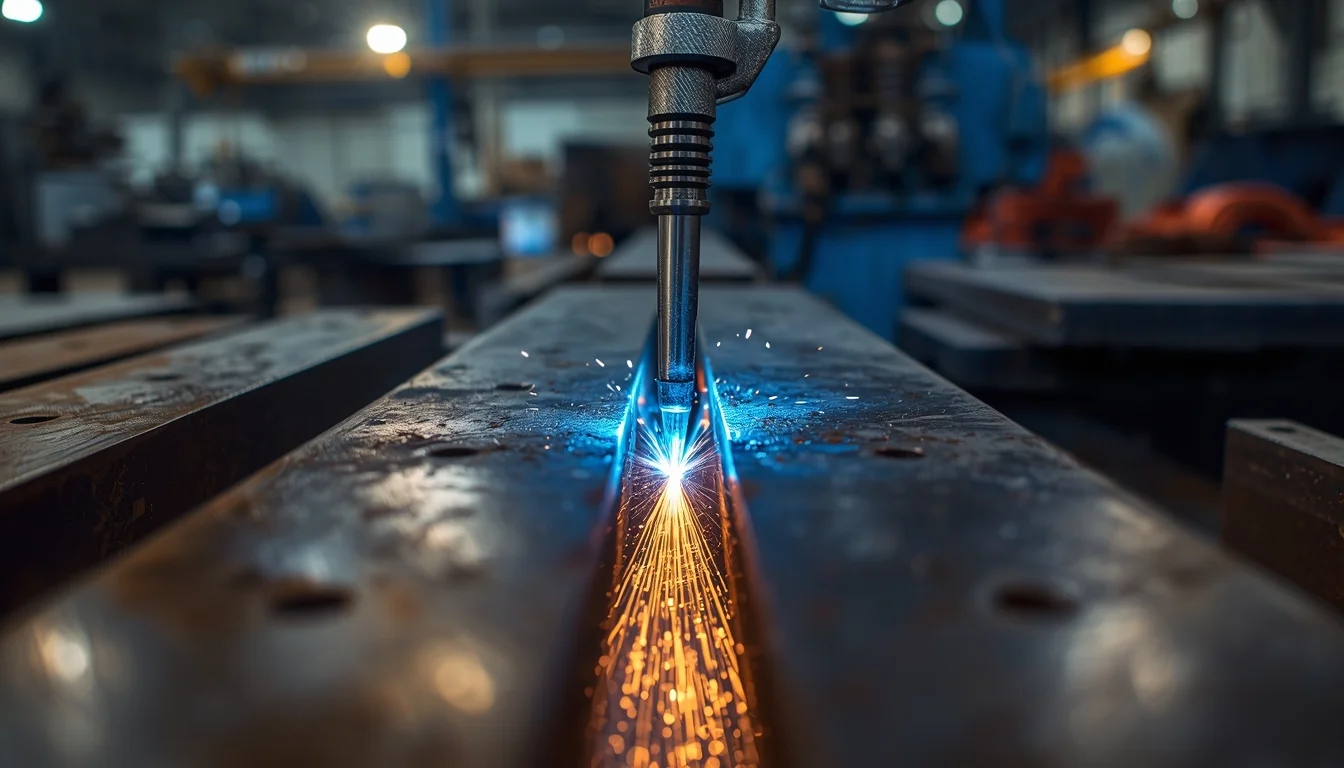
When we talk about millimeter-level precision and high speed in joining steel structures, there is one solution that truly makes a difference. Narrow-gap welding is a modern technique for joining thick metal plates using minimal filler metal, lower heat input, and reduced distortion. By combining a narrow weld groove with advanced five-axis automation, this process delivers exceptional accuracy and consistency. It is an ideal choice for industries where precision is critical, such as shipbuilding, pressure vessel manufacturing, and wind tower production. Below, we take a closer look at how narrow-gap welding works, the equipment involved, and its advantages and limitations.
Narrow-gap welding is a specialized method primarily used for very thick sections. Instead of preparing a wide, open V-groove between two components, as in conventional techniques, the operator creates a much narrower groove with nearly parallel sidewalls. As a result:
By leveraging the capabilities of various welding processes—such as SAW, GMAW, MIG/MAG, and TIG—this technique has significantly transformed heavy-section metal joining. In practice, the term “narrow-gap welding” refers to processes specifically designed to reduce weld metal volume in butt joints, particularly in carbon and low-alloy steels.
One important characteristic of this method is that it is typically mechanized. The focus is on improving efficiency, lowering labor costs, and minimizing material waste.
Narrow-gap welding is most commonly applied to:
The main advantages of narrow-gap welding include:
Despite its advantages, this method also has certain limitations:
As mentioned earlier, the main objective of narrow-gap welding is to join thick sections using the minimum possible filler metal and heat input without compromising weld quality. To achieve this, the process typically involves the following four stages:
Unlike conventional V- or U-grooves, the groove angle in this method is very small (typically about 2 to 20 degrees). The sidewalls are nearly parallel, and the groove width may be only 8 to 20 mm, even for thicknesses exceeding 50 mm.
The groove is precisely machined to ensure that:
The root pass is critically important. In many industrial applications, processes such as TIG or SAW are used to achieve full penetration at the root.
Precise control of parameters such as current, voltage, travel speed, and arc position relative to the sidewalls is essential. If complete sidewall fusion is not achieved at this stage, the risk of lack of fusion defects in subsequent layers increases significantly.
After completing the root pass, the groove is filled through multiple narrow, successive passes.
At this stage, the operator must carefully control arc movement to ensure complete fusion of the sidewalls. The weld pool width must also be controlled to prevent incomplete fusion. Due to the limited groove width, oscillation systems or specially designed nozzles are often used so that the arc can engage both sidewalls simultaneously.
One of the primary advantages of this method is the reduced weld metal volume, which leads to lower residual stresses and less distortion.
However, because the groove depth is significant, controlling the interpass temperature is crucial to prevent hot cracking and other metallurgical issues.
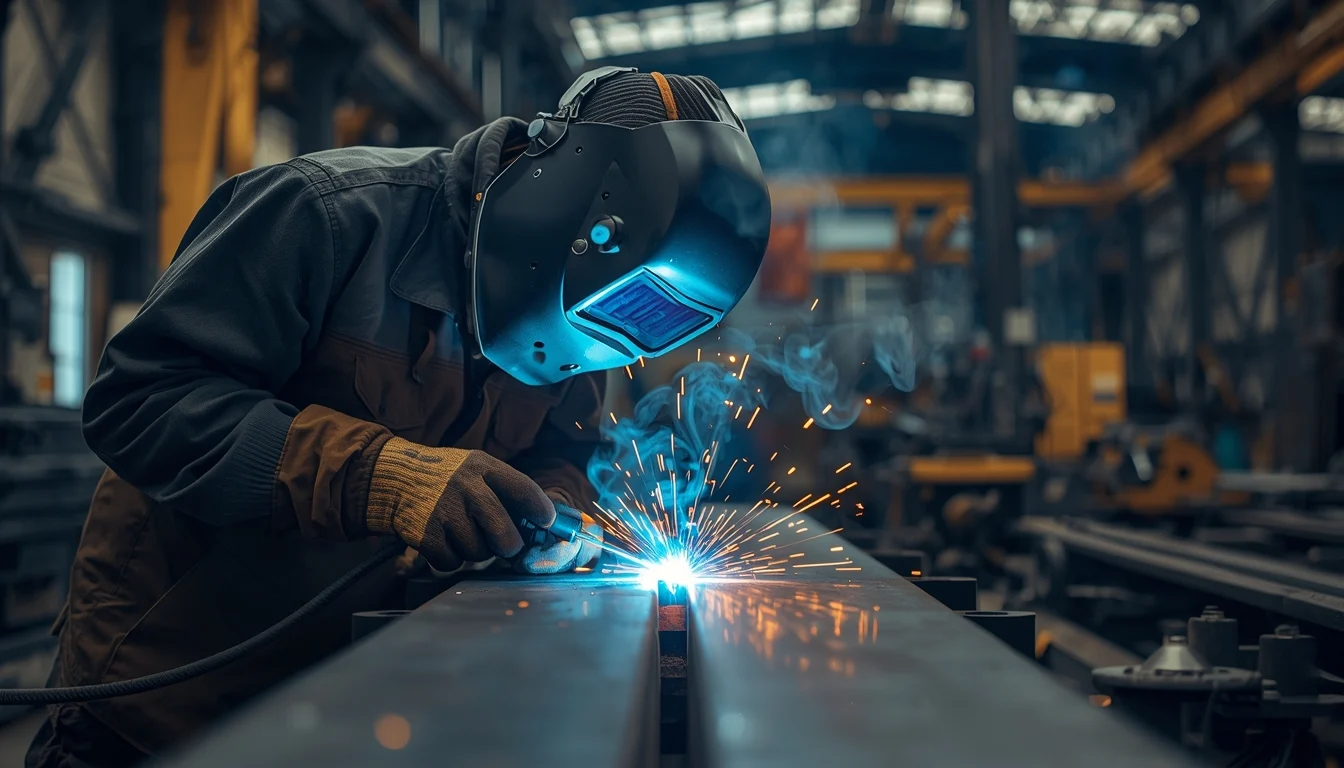
Because this method is highly advanced and largely mechanized, its equipment is more specialized than in many conventional welding processes, such as stick welding. Below, each key component is explained along with its function.
Standard welding torches are generally too wide for this application. Instead, specially designed slim torches are used so they can fit into narrow grooves.
These torches are built to:
Their primary function is to achieve complete sidewall melting and maintain weld quality within the confined groove.
Due to the high sensitivity of narrow-gap welding, semi-automatic or fully automatic systems are commonly used. These systems are responsible for:
In large industrial projects—such as pressure vessel fabrication—mechanization is often essential to ensure repeatability and reliability.
Accurate control of current, voltage, and metal transfer mode is critical in this method. in many applications, advanced power sources with pulse capability, heat input control, and real-time parameter monitoring are used. this level of control helps maintain weld quality, especially at significant groove depths.
Because the groove is narrow, keeping the arc centered may lead to incomplete sidewall fusion. arc oscillation systems move the arc in a controlled pattern between the two sidewalls. This controlled motion improves fusion and reduces the risk of defects.
Narrow-gap welding was specifically developed for joining thick sections. According to technical references, it is selected when reducing filler metal usage, controlling heat input, and minimizing distortion in heavy sections are critical factors.
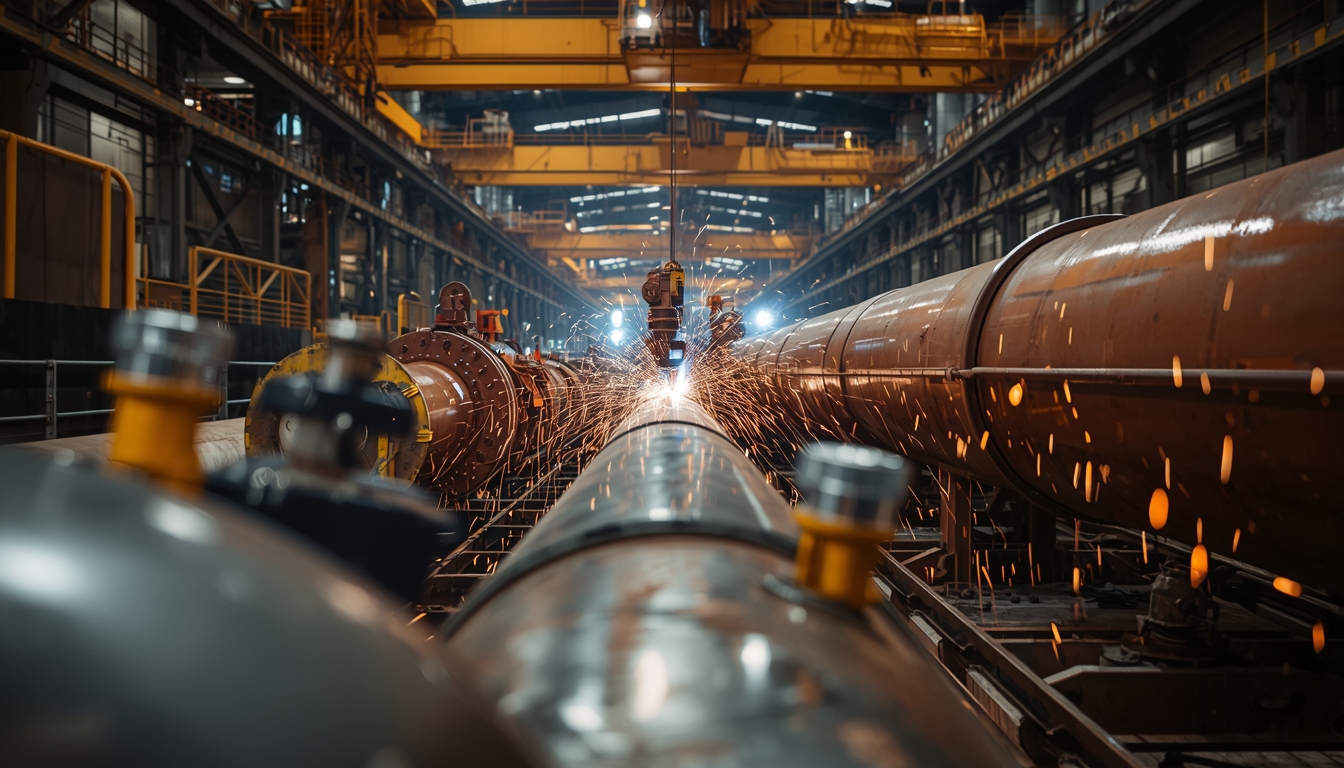
This method is widely used in the fabrication of pressure vessels, reactors, and thick-walled pipelines. In heavy-wall components, conventional groove designs require large amounts of filler metal and generate higher thermal stresses. Narrow-gap welding reduces weld metal volume, limits the size of the heat-affected zone (HAZ), and lowers residual stresses—key requirements for pressure-containing equipment.
In boilers, turbines, and thick pressure enclosures, strict control over metallurgical properties is essential. Narrow-gap welding allows better management of heat input, reduces unwanted microstructural changes in the base metal, and minimizes distortion in large, heavy components.
When joining thick steel plates in ship hulls or offshore structures, productivity and cost efficiency are major concerns. By reducing the number of passes required, narrow-gap welding improves efficiency and shortens production time.
In the production of industrial presses, large molds, and massive steel structures, this method helps decrease material consumption and overall manufacturing time.
Because it is a highly advanced and mechanized method, narrow-gap welding equipment is more specialized than other welding methods such as electro-slag welding. In this section, we will explain each along with their role.
The most significant risk in this method is incomplete sidewall melting. Controlled arc oscillation or precise torch positioning is necessary to prevent lack of fusion defects.
In thick sections, heat can accumulate and cause metallurgical changes or cracking. Continuous monitoring of interpass temperature helps prevent these issues.
Given the process sensitivity, semi-automatic or fully automatic systems improve consistency and reduce the likelihood of human error.
Uniform groove width throughout the full depth is essential. Precise machining plays a key role in preventing welding defects.
Depending on material type and thickness, choose the most suitable process—such as TIG, MIG/MAG, or SAW—to achieve optimal results.