What is Electroslag Welding and When Should You Use It?
Date of Release : 12/31/2025
Table of Contents
Electroslag Welding (ESW) is a powerful welding method designed for joining very thick plates and heavy metal sections, which is why it is mainly used in heavy industries. The biggest advantage of this process is its ability to weld thick materials in a single pass with extremely deep penetration, uniform weld quality, and much lower distortion compared to multi-pass welding methods. For this reason, it is widely used in the fabrication of large structures, bridges, ship components, and heavy industrial equipment.
What does “slag” actually mean?
Slag is essentially a byproduct that turns into a molten layer when heated. In conventional welding processes like SMAW or MIG, slag mainly acts as a protective layer and is removed after welding. In Electroslag Welding, however, the entire concept changes. Here, the slag is not just a byproduct — it is the core of the process.
In ESW, there is no traditional arc once the process is established. Instead, a pool of electrically conductive molten slag is created, and this molten slag generates the heat required to melt the base metal. The process works from the bottom upward, melting the edges of the workpiece and allowing the molten metal to solidify gradually into a single, solid weld.
In practical terms, the slag performs three critical functions:
It generates intense and stable heat
It protects the molten weld pool from atmospheric contamination
It shapes and smooths the weld bead as solidification occurs
If you think of Electroslag Welding as an arc-free welding machine, the slag acts as the engine driving the entire operation. This is why ESW relies heavily on precise control of electrical input and properly designed Welding and Cutting power supplies, especially when dealing with thick structural steel sections.
What Is Electroslag Welding?
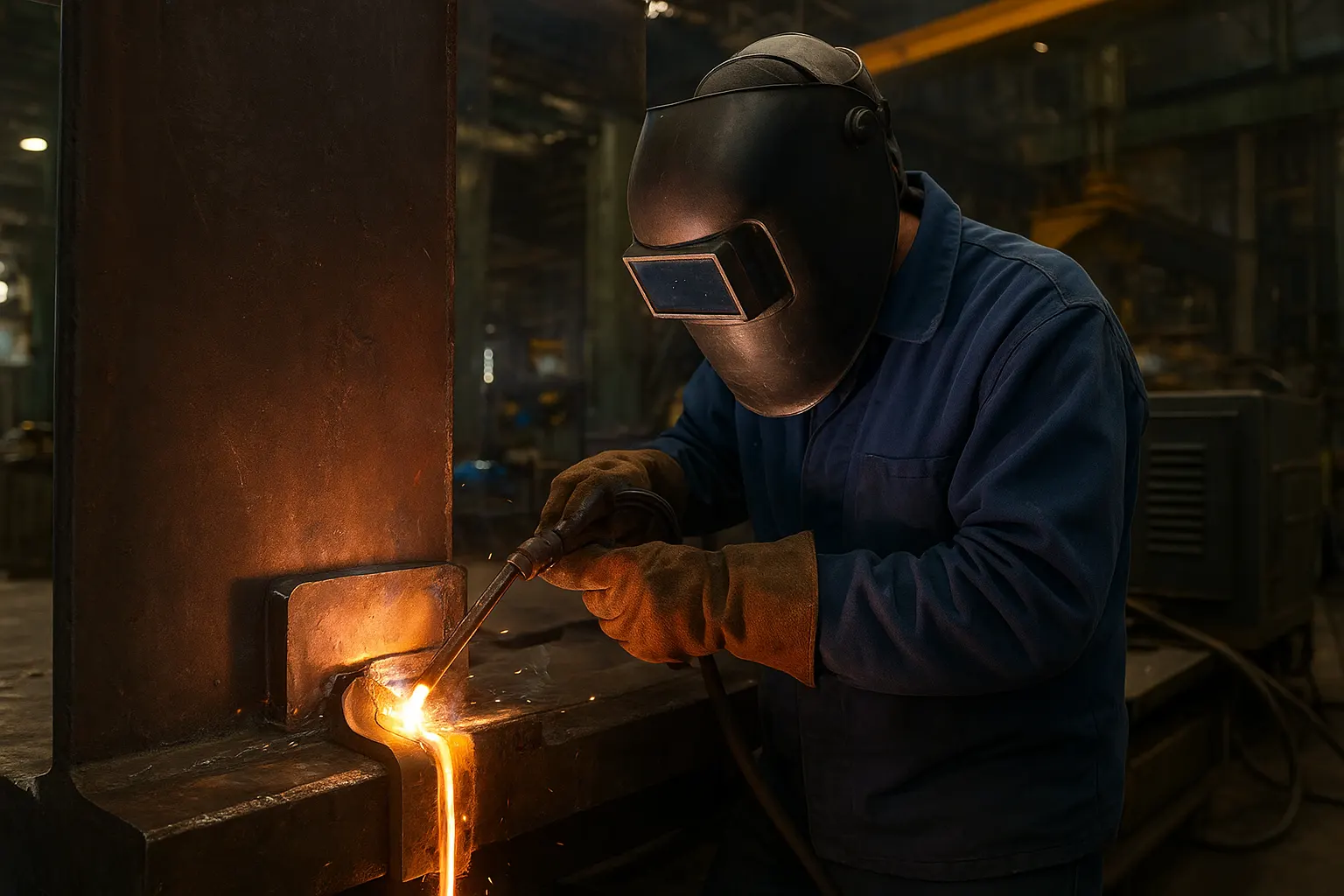
Electroslag Welding is a heavy-duty industrial welding method specifically designed for joining very thick plates and metal components in a vertical position—thicknesses that are difficult or even impractical to weld using conventional processes like stick welding. In this method, the weld starts at the bottom of the joint and progresses upward. In this method, a continuous electric arc is not maintained, so there are no constant sparks or arc flashes. Instead, a pool of molten slag is created, and this slag itself performs the melting and joining. In practice, the slag acts like a thermal battery: once it heats up, it retains heat as long as electrical current flows through it, providing the energy needed to melt the metal.
What Is Electroslag Welding
The 6 Stages of the Electroslag Welding Process
When we talk about Electroslag Welding (ESW), we’re referring to a process used when two extremely thick plates need to be joined—something that methods like SMAW or MIG struggle to handle efficiently. This is why ESW is considered one of the most effective solutions for welding high-thickness sections, using molten slag as the main heat source. Here’s how the process works:
Joint setup and positioning The workpieces are positioned vertically with a very narrow gap between them, allowing the weld to be formed from the bottom upward.
Starting with a short arc A brief arc is struck between the electrode and the base metal to initiate heating. This arc melts the flux, turning it into slag.
Formation of the molten slag pool Once the slag becomes hot enough, the arc is extinguished. From this point on, heat is generated by electrical resistance as current flows through the molten slag, which now acts like a high-temperature furnace.
Melting of the electrode and base metal The consumable electrode—usually a wire or steel strip—feeds into the slag pool. The intense heat of the molten slag melts both the electrode and the edges of the base metal.
Upward filling of the joint As melting continues, the molten weld metal gradually rises along the joint, forming a strong, continuous bond between the two plates.
Shape control and leakage prevention Water-cooled copper shoes are used to contain the molten slag and metal, preventing leakage and keeping the weld confined to the intended path.
Advantages and Limitations of Electroslag Welding
Now that we have a clearer picture of what Electroslag Welding is and how it works, it’s time to take a deep look at its strengths and weaknesses. The truth is, ESW is not a “one-size-fits-all” welding process. In some situations, it performs exceptionally well, and in others, it simply isn’t the right choice. If you’re considering it for a project, you need to understand both sides of the story.
Advantages of ESW:
Extremely fast for very thick sections When you’re dealing with plate thicknesses up to 300 mm, ESW is one of the fastest welding methods available. The entire joint is filled in a single operation, with no need for multiple passes or repeated stops.
High weld quality with heavy metal deposition Because the heat comes from the molten slag pool, the weld forms with excellent penetration and a very uniform structure. This makes ESW highly reliable for large structural components.
Minimal distortion and warping Once the initial arc is extinguished, heat input is controlled and localized through the slag. This results in significantly less distortion and lower residual stress compared to many arc-based welding methods.
Ideal for heavy industrial fabrication Applications such as thick-walled tanks, large columns, industrial frames, and heavy machinery benefit greatly from ESW. In these cases, the process is both time-efficient and cost-effective.
Fully mechanized and automation-friendly Electroslag Welding is a fully mechanized process, which means human error is minimized. This makes it an excellent option for repetitive, large-scale industrial production.
Limitations of ESW:
Not suitable for thin materials ESW is not designed for thin plates. When used on low-thickness sections, weld quality suffers, or the process becomes unstable altogether.
Requires highly skilled operators Precise control of slag composition, electrical current, wire feed, and water-cooled molds is critical. If these parameters aren’t set correctly, the entire weld can fail, so operator experience is essential.
Expensive and complex equipment ESW systems require specialized machines, copper shoes, cooling systems, and dedicated power sources. The initial investment is relatively high compared to simpler welding methods.
Risk of a large heat-affected zone (HAZ) Because heat remains concentrated in one area for an extended time, the HAZ can be larger than in processes such as MIG or TIG welding.
Limited welding positions Electroslag Welding is essentially restricted to vertical joints. Other welding positions are impractical or unusable with this process.
Applications of Electroslag Welding
Applications of Electroslag Welding
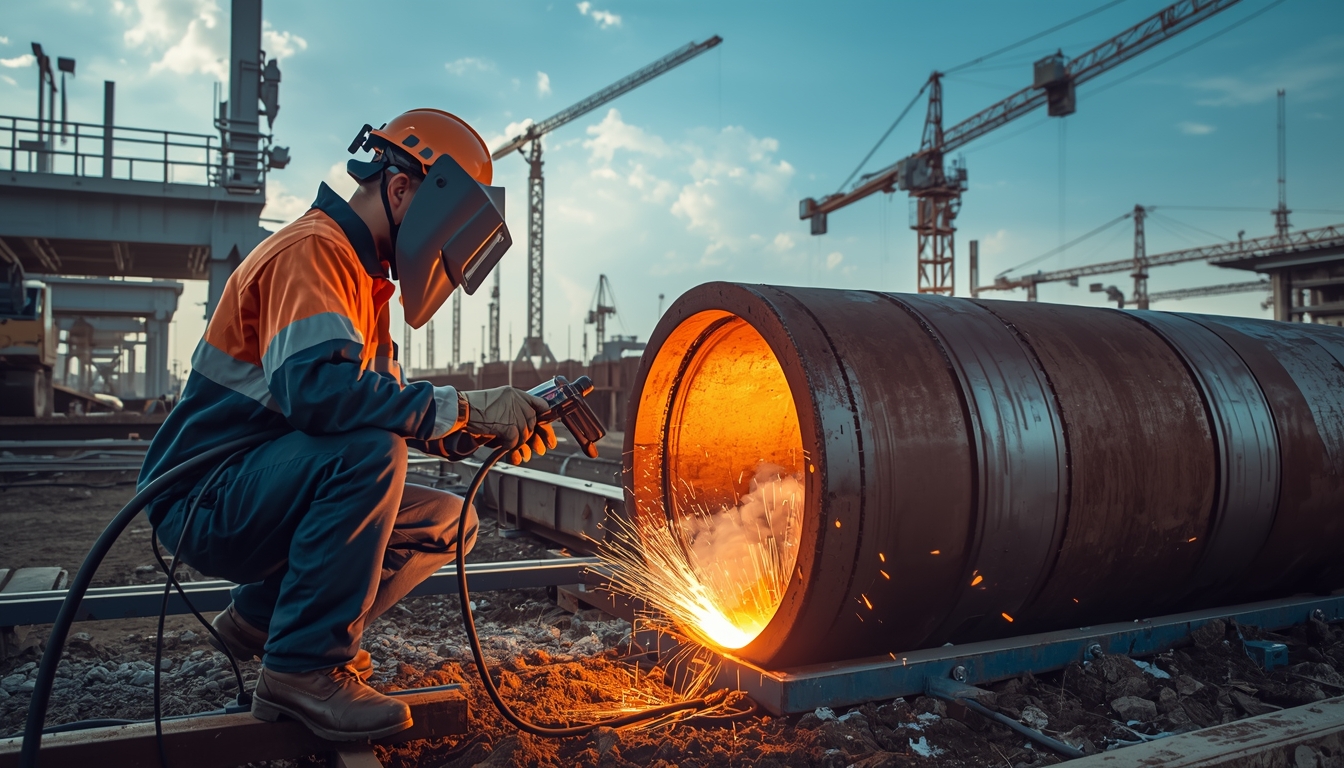
Electroslag welding is prized for its strength and speed, making it the go-to method for heavy industrial projects involving thick materials and tight deadlines. Below are its key industrial applications:
Heavy Fabrication: Used for constructing massive components like columns, giant girders, heavy machinery frames, and other large steel parts.
Welding Thick Plates & Vertical Joints: It’s often the best choice for joining materials with thicknesses exceeding 50 mm in a vertical position.
Shipbuilding & Large Storage Tanks: Ideal for quickly constructing the thick, vertical walls required for ship hulls and large tank structures.
Construction of Dams, Bridges & Major Civil Structures: The large steel sections used in these mega-projects are typically assembled using ESW.
Defense Industry & Armored Equipment Manufacturing: Perfect for welding the thick steel structures that require extreme durability and resistance, such as in armored vehicles.
Joining Flanges, Thick Rings & Large Steel Blocks: Commonly used in heavy machinery and component manufacturing plants for these types of high-strength connections.