





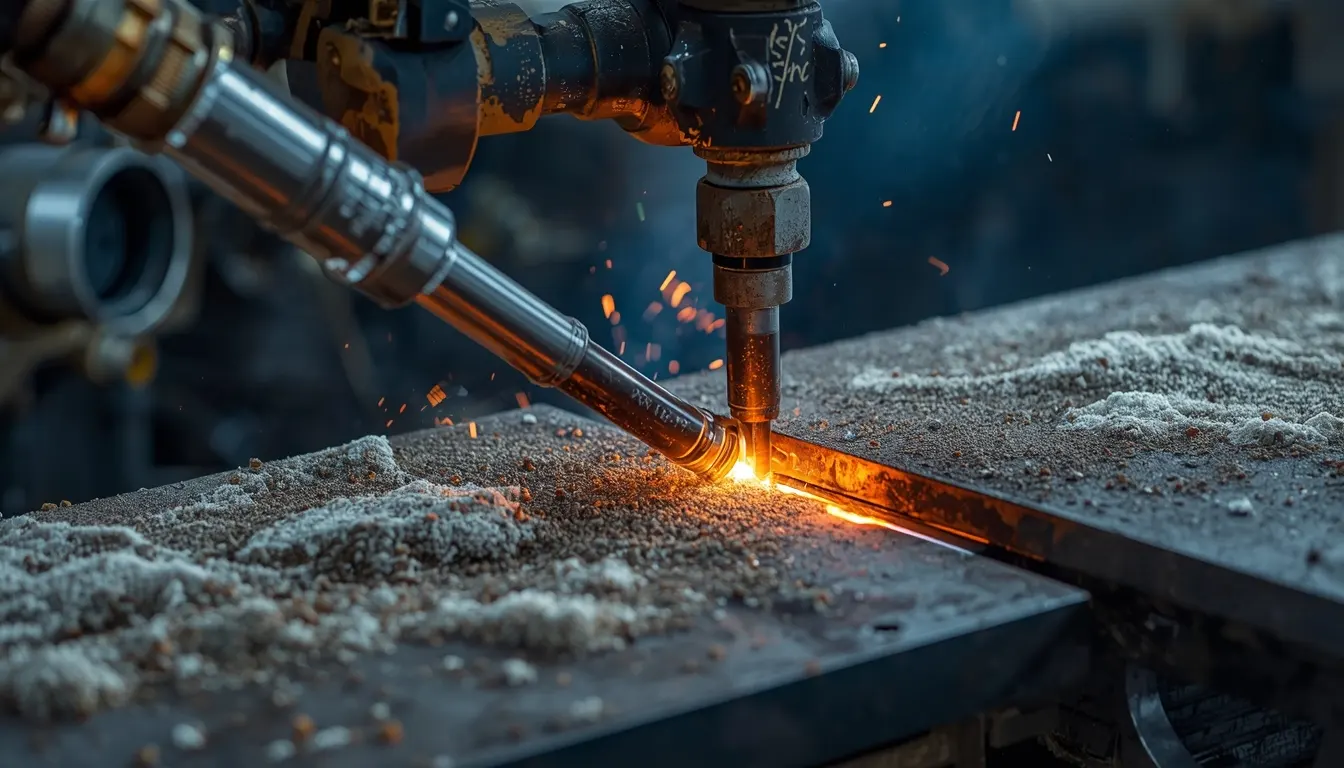
Submerged Arc Welding (SAW) is an industrial welding process in which the welding arc is concealed beneath a layer of protective granular flux. This flux shields the arc from atmospheric exposure, limits spatter and sparks, and enables the formation of a high-quality weld. SAW is commonly used for joining thick plates and manufacturing large industrial components such as pressure vessels, pipelines, and heavy steel structures, as it provides high deposition rates, deep penetration, and efficient use of filler material.
In simple terms, submerged arc welding operates with the electric arc “hidden beneath a blanket” — not soil, but a specially engineered granular material known as flux. In most welding processes, the arc light, sparks, and fumes are clearly visible. In SAW, however, the arc burns entirely under a layer of flux, so those bright and noisy visual effects are largely absent. This seemingly small difference has a significant impact on both weld quality and process efficiency.
The flux performs two primary functions:
This method is specifically designed for welding thick metal sections, where both high mechanical strength and efficient execution are essential. For that reason, it is widely regarded as a practical and reliable choice in heavy industries.
In SAW, both the consumable wire electrode and the granular flux are continuously supplied in a mechanized manner. This continuous and automated feed system makes the process fast, consistent, and well suited for large-scale production.
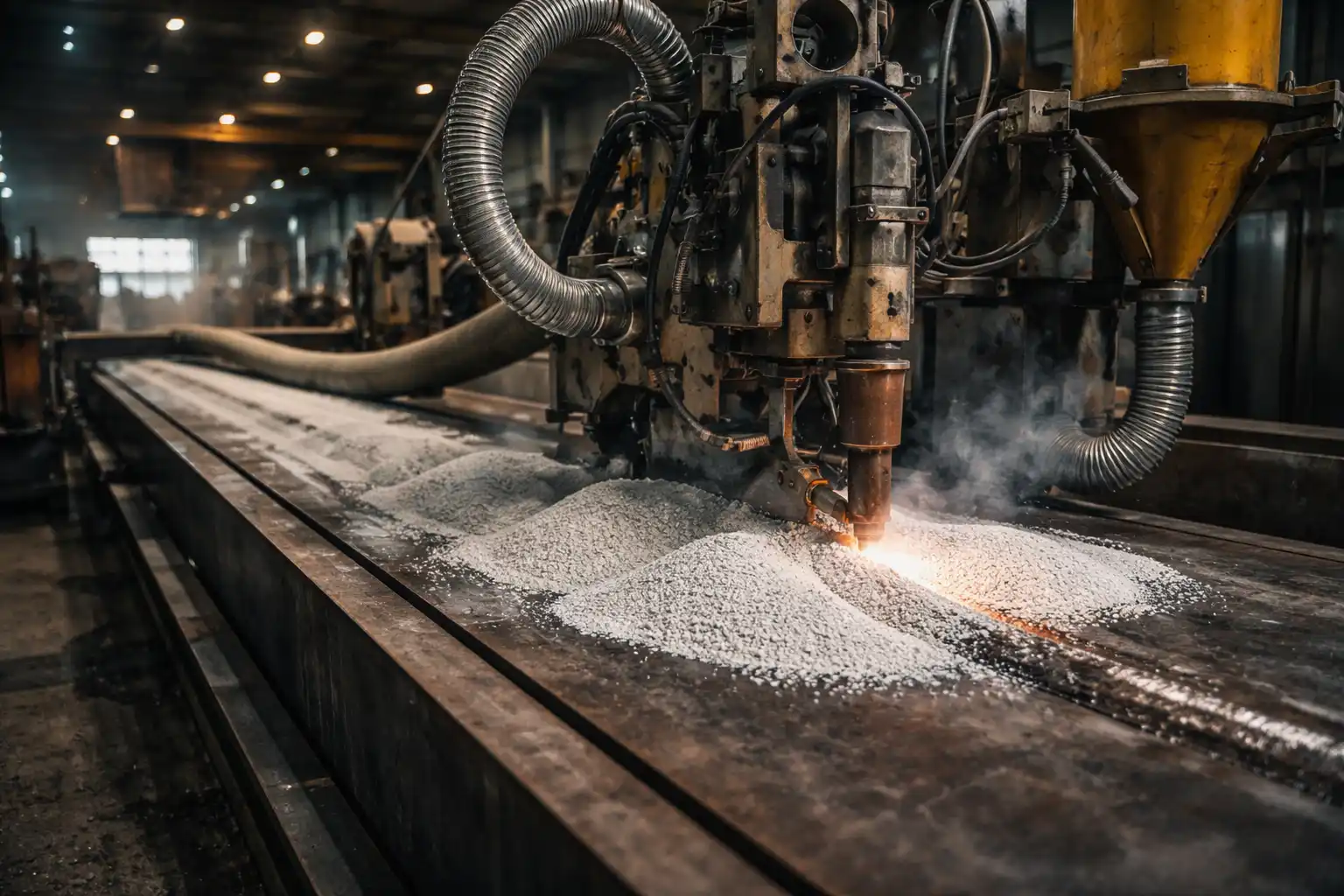
To better understand the submerged arc welding process, let’s walk through it step by step:
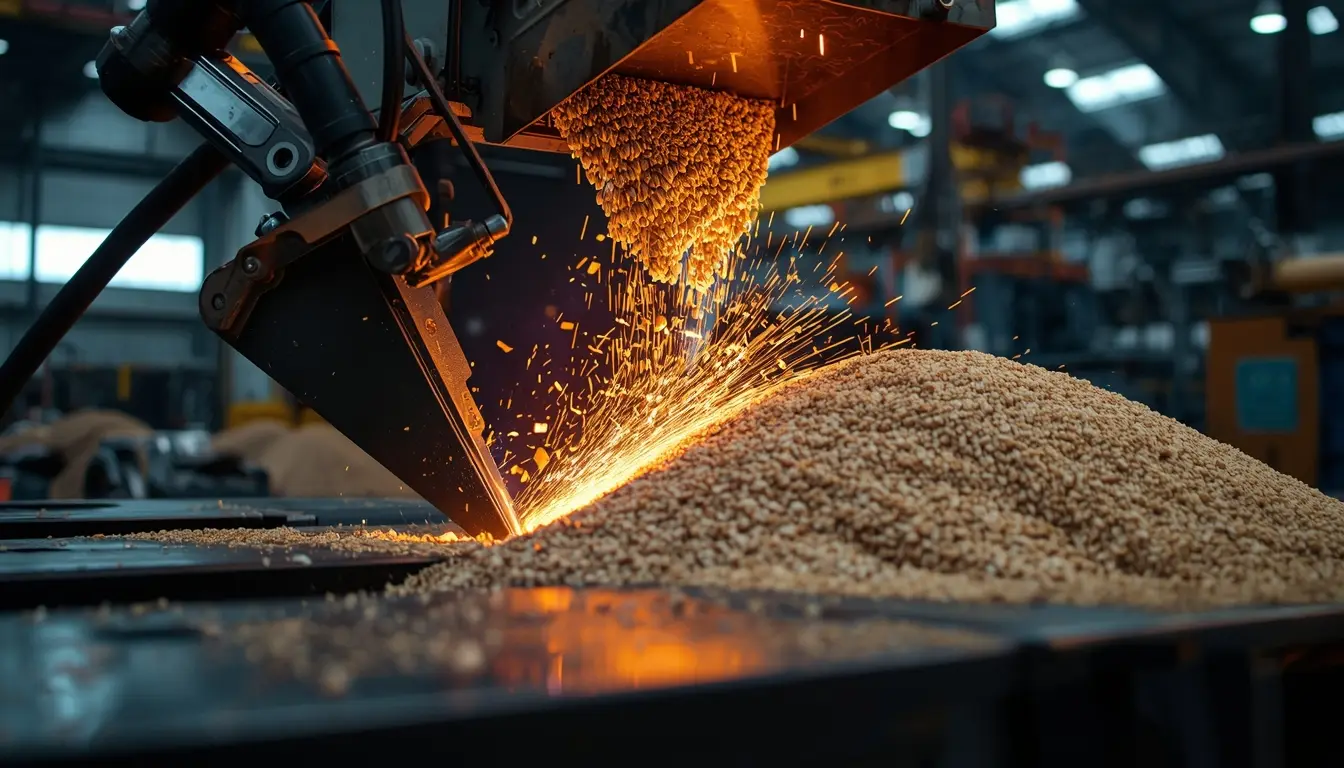
In SAW, flux does more than provide shielding. Its chemical composition directly influences the mechanical and metallurgical properties of the weld. Selecting the appropriate flux can significantly affect toughness, strength, and even the appearance of the weld bead.
When selecting a welding method, two essential questions arise:
Which metals is submerged arc welding suitable for? and What thickness range delivers optimal performance?
Submerged Arc Welding (SAW) is specifically designed for applications involving thick materials, where deep penetration, high weld quality, and productivity are critical priorities. SAW is particularly effective for the following materials:
Carbon and Low-Alloy Steels
This is the most common application. SAW performs exceptionally well on thick steel plates and structural sections where heat control and deep penetration are essential.
Heat-Resistant Alloy Steels
For equipment operating at elevated temperatures—such as power plant pressure vessels—SAW provides consistent quality and structural reliability.
Stainless Steels
Although material costs may be higher, SAW can be successfully applied to thick stainless steel sections with stable arc performance and good metallurgical control.
Nickel Alloys and, in Certain Cases, Thick Aluminum Sections
These materials may be welded in specialized applications, such as energy and marine industries, though SAW is predominantly used for steel.
To illustrate, imagine welding two steel plates each 60 mm thick. Using conventional processes like MIG or TIG would be time-consuming and would require significant filler metal and energy input. With SAW, however, the arc operates beneath a protective flux layer, allowing controlled heat input and deep penetration. The result is a high-quality weld achieved more efficiently and with lower consumable usage—without compromising structural integrity.
When referring to welding equipment in SAW, we are not talking about a single welding machine. Instead, SAW relies on an integrated system in which all components must operate in precise coordination to produce a high-quality weld. Understanding these components helps ensure optimal performance from this advanced welding process.
Conventional welding torches are not suitable for SAW because, in addition to guiding the electrode, they must also manage the delivery of flux. These nozzles are designed to:
In simple terms, the nozzle functions like a carefully aimed hose that delivers water exactly where it is needed—ensuring efficiency and minimizing waste.
One of the key success factors in SAW is maintaining consistent and accurate electrode movement along the weld seam. For this reason, most industrial applications rely on mechanized or robotic systems. These systems regulate travel speed, direction, and penetration depth. In large-scale projects such as pressure vessels or pipelines, mechanized control is essential.
In submerged arc welding, accurate control of current, voltage, and metal transfer mode is critical. Many applications use advanced power sources capable of pulse adjustment and heat input regulation. This level of control ensures stable weld quality, even in deep-penetration applications.
In SAW, the granular flux does more than simply shield the arc. It influences heat control, bead shape, and overall weld cleanliness. The flux delivery system:
Fluxes are available in various formulations, and proper selection improves weld quality while reducing material waste.
One of the advanced features of SAW is its flux recovery system, which is especially valuable in large-scale projects. Not all applied flux is consumed during welding; some melts into slag, while the remainder stays unused. The recovery system collects the un-melted flux, screens and cleans it, and returns it to the hopper for reuse. This significantly lowers operational costs and enhances productivity.
Now that we understand how SAW operates, it is important to examine why engineers and manufacturers choose this process—and where it may present certain limitations.
High Deposition Rate: Weld metal is deposited rapidly, reducing overall production time.
Superior Weld Quality: Because the arc is fully protected by flux, the weld achieves deep penetration and high density with minimal defects.
Very Low Spatter: Since the arc remains submerged, spatter is nearly eliminated, resulting in a cleaner working environment.
Improved Energy Efficiency: Arc energy is concentrated directly at the joint, minimizing unnecessary heat dispersion.
Ease of Automation: SAW is highly suitable for mechanized and high-volume production environments.
Position Restrictions: The process performs best in flat or horizontal positions and is generally unsuitable for vertical or overhead welding.
Initial Setup Requirements: Accurate flux preparation and distribution require dedicated equipment and setup time.
Large Equipment Size: Compared to TIG or MIG systems, SAW equipment is bulkier and less portable.
Need for Technical Expertise: Parameter adjustments in SAW demand greater precision than in simpler welding processes.
Due to its deep penetration, high deposition rate, and consistent weld quality, SAW is widely used in heavy industries where thick materials must be joined reliably and repeatedly.
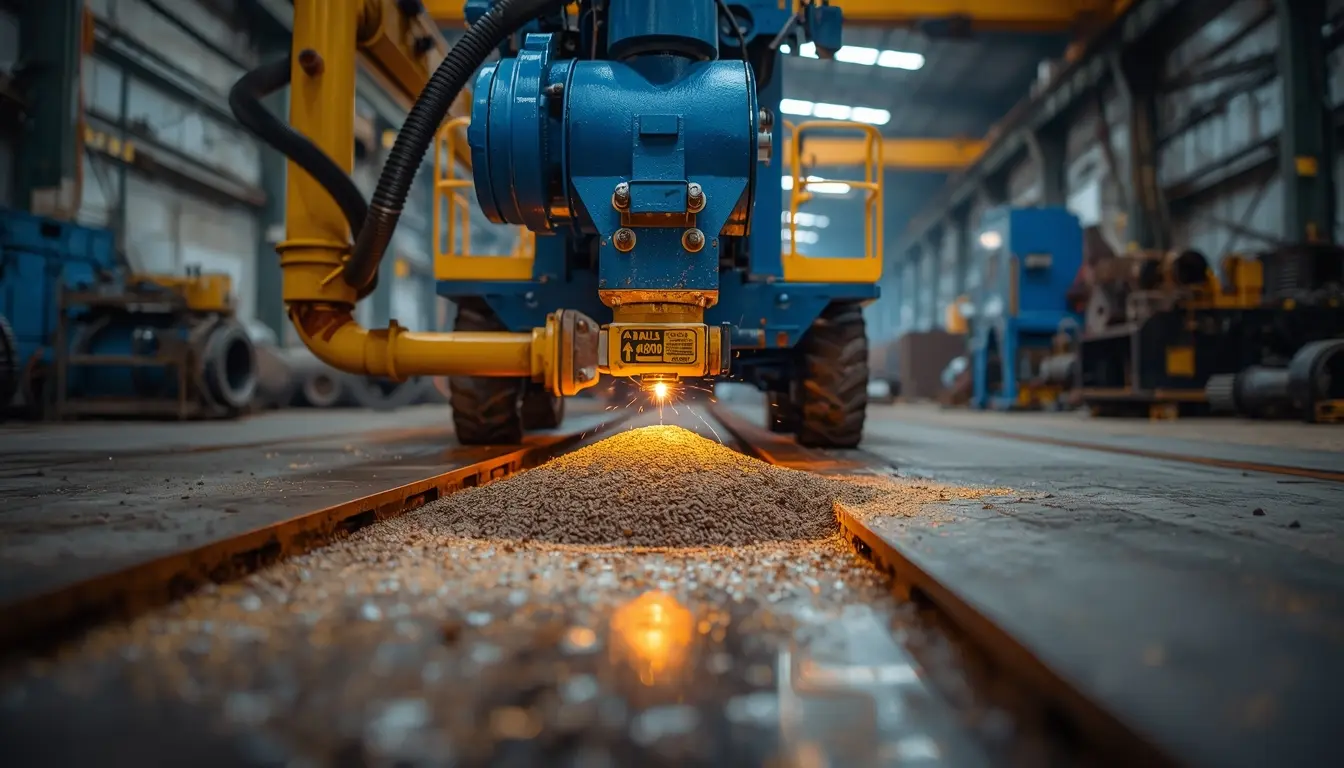
SAW is commonly applied in the fabrication of pressure vessels, transmission pipelines, and refinery equipment. Its ability to produce full-penetration welds with minimal defects makes it especially valuable in safety-critical applications.
Boilers, steam drums, and high-temperature components require welds that can withstand thermal stress. SAW offers controlled heat input and strong metallurgical properties, making it a preferred choice in this field.
Ship hulls are constructed from thick steel plates with long, continuous seams. The high speed and mechanization capability of SAW make it highly efficient and cost-effective for these extended welds.
Large beams and columns demand deep, structurally sound welds. In mass production of heavy steel frameworks, SAW improves fabrication speed while reducing overall manufacturing costs.
Storage tanks, pressure cylinders, and cylindrical shells often involve long longitudinal and circumferential seams. SAW ensures uniform weld quality and a smooth weld profile along these continuous joints.
Before carrying out submerged arc welding, observing several key considerations helps achieve professional results: